Monday, April 6, 2020
'What about us?': Frontline primary care practices fear for survival amid coronavirus
Autumn Road Family Practice in Little Rock, Arkansas, thought it had a plan in place to weather the coronavirus pandemic.
The six-provider practice, which has been in business for half a century serving its close-knit community, began to gather personal protective equipment for workers and ask patients screening questions through its call center and front desk. Autumn Road had a partner meeting March 12, a Thursday, to update its response to the budding coronavirus outbreak in Little Rock, including the first patient testing positive in its offices.
But things changed dramatically in a matter of days.
"We came in Monday morning and it was like a whole new world," Tabitha Childers, Autumn Road's clinic administrator, told Healthcare Dive. "All of a sudden our patients are canceling their appointments ... About Wednesday we just realized that the finances are quickly failing. Thursday we made a list of what we could cut."
Once 'fringe idea,' doctors warming to patients reading encounter notes, study suggests
For decades, the physician-patient relationship was mostly a one-way street. If you wanted to know what your doctor had put in your records, you usually had to ask them directly, and some might be reluctant to fully disclose their contents. While HIPAA allowed patients easier access to their medical records starting in the late 1990s, patients still received them long after the fact and without interaction with their doctors.
However, the 21st Century Cures Act of 2016 pushed patient access to medical records into a whole new realm. Patients can not only access their records electronically and often within days of a medical visit, but their physician notes as well. Moreover, the JAMA Open study, authored by doctors and researchers from Harvard Medical School, Beth Israel Deaconess Medical Center, the University of Massachusetts, UCLA, the University of Washington and the Steele Institute for Health Innovation, concludes that the attitudes of the past may be fading away.
Aside from the nearly three-quarters of clinicians who said note sharing was a good idea, the same number, 74% of those who knew their notes were being read, said it was a good way to engage patients in their care. Altogether, 1,628 clinicians practicing at three different health systems, 58% of whom are doctors, were queried through a web-based survey conducted between May and August 2018.
Trump administration expedites Medicare payments to providers amid coronavirus
Dive Insight:
The coronavirus outbreak has surged in the U.S. in recent days, exposing gaping holes in an already overtaxed healthcare system and threatening to bankrupt providers, especially small, independent ones. Hospitals have been asked to halt all non-essential elective surgeries to shore up resources for COVID-19, removing a lucrative source of income for providers as the novel coronavirus has infected more than 143,000 people in the U.S. and killed more than 2,500 as of Monday morning.
CMS' actions over the weekend to more quickly get Medicare payments to providers to bolster their finances come days after President Donald Trump signed a $2 trillion stimulus package meant to get the U.S. economy moving again. The so-called CARES Act, which made changes allowing CMS to expand which providers qualify for the accelerated traditional fee-for-service Medicare payments, benchmarks some $100 billion for hospitals, though it's not entirely clear how the money will be apportioned.
"With our nation's health care providers on the front lines in the fight against COVID-19, dollars and cents shouldn't be adding to their worries," CMS Administrator Seema Verma said in a statement. CMS last made the advance payments available to providers during Hurricanes Harvey and Irma in 2017.
Telehealth, retail clinic use increasing in pivot toward lower-priced medical delivery sites
Dive Brief:
Consumer use of telehealth and retail clinics spiked from 2017 to 2018, while use of urgent care centers, ambulatory surgery centers and emergency rooms dropped as consumers increasingly turn to cheaper sites of care for low-acuity medical needs.
Telehealth use grew 12% and retail clinic use grew 10% during the time period, according to a new report from health cost nonprofit FAIR Health. At the same time, urgent care center use fell 11%, ambulatory surgery center use fell 12% and ER use fell 15%.
However, despite increased use of telehealth and retail clinics, use of all five places of health service has slowed overall. Retail clinics and virtual care saw growth from 2013 to 2018, but at a much slower rate compared to 2012 to 2017, FAIR Health found. Similarly, for urgent care centers, ambulatory surgery centers and ERs, growth in 2009 to 2018 was at a much slower rate than 2008 to 2017.
Dorm rooms as hospitals, ER telehealth: CMS creates 'unprecedented' flexibility as COVID-19 rages on
UPDATE: April 1, 2020: Hospital groups on Tuesday applauded the actions from CMS, with the American Hospital Association calling the ability to care for patients outside of hospitals' four walls a "critical lifeline in the the fight against COVID-19. AHA said it would "continue to work on additional waiver suggestions."
Dive Brief:
CMS on Monday announced an "unprecedented range" of temporary regulatory changes aimed at helping providers boost capacity and staff to treat patients amid the COVID-19 pandemic. The changes mean hospitals can bill for services provided outside their buildings so that patients can be screened offsite or through virtual encounters.
Ambulatory surgery centers will be able to contract with local health systems to provide hospital services such as cancer care and necessary surgeries and bill as hospitals. Approved non-hospital spaces like dorm rooms or hotels can be used for patient care and quarantine purposes. Also, physician-owned hospitals will now be able to increase the number of licensed beds and operating rooms during the emergency.
Also included are a relaxing of guidelines to allow health systems to hire clinicians in the community who would otherwise be providing nonessential services. And physician assistants, nurse practitioners, respiratory therapists and others will have more ability to practice at the top of their licenses by performing services that would otherwise need physician approval, such as prescribing and ordering tests.
BD rolls out test to detect coronavirus antibodies
Dive Brief:
BD on Tuesday announced it's making available a rapid, point-of-care blood test that identifies antibodies to confirm exposure to COVID-19. BD said the serology test can detect current or past exposure to the virus.
The product, developed and manufactured by Morrisville, North Carolina-based biotech BioMedomics, will be distributed by Henry Schein to U.S. healthcare providers. BD expects to begin shipping the tests in April.
Unlike molecular tests that detect SARS-CoV-2 nucleic acids or antigen-based tests, the serological assay identifies antibodies in the blood that the body produces in response to coronavirus infection. The antibodies develop in the middle to late stages of infection but may remain present after exposure, which could help identify people who were exposed to the virus but are asymptomatic
Dive Insight:
Serological diagnostics can be used to identify people who have recovered from the disease and have immunity to the infection. Theoretically, those people could return to work and serve in high-risk roles on the frontlines of healthcare and other community efforts to fight the pandemic, giving way to the idea of "immunity passports" in countries like Germany.
Policymakers in the U.S. have also elevated serological testing as a tool for "restarting" society as epidemic transmission is eventually brought under control.
Sunday, April 5, 2020
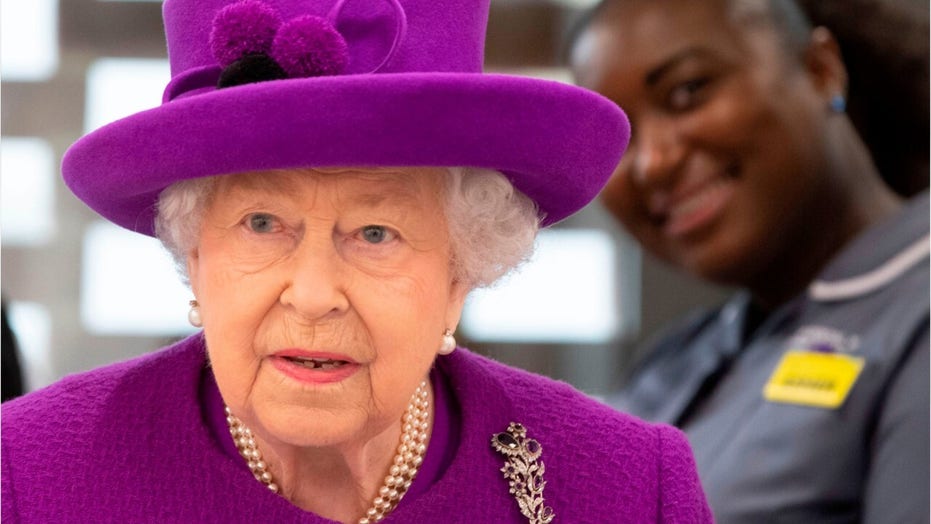
Coronavirus LIVE updates: Queen gives speech as two more NHS workers die
The Queen has delivered an unprecedented address praising health workers and evoking the spirit of the Blitz as the UK grabbles with the coronavirus crisis.
It comes as two frontline health workers became the latest NHS staff to die after testing positive for coronavirus.
Today it emerged that midwife Essex Lynsay Coventry, 54, and "long-serving" Liverpool nurse Liz Glanister were among the killer bug's casualties.
It comes as Health Secretary Matt Hancock said he has lost two people he was fond of as he empathised with how difficult the coronavirus pandemic is for the nation.
The Health Secretary addressed Brits in today's press briefing after it was confirmed a further 621 people have died of Covid-19 in the UK, taking the death toll to 4,934.
Mr Hancock said the Government is not imminently looking to tighten the rules on exercising outdoors - but further measures could follow if people do not follow them.
Earlier today it emerged NHS nurse John Alagos, just 23 years old and believed to be the youngest health worker in the UK to succumb to the illness, had died.
This morning Professor Neil Ferguson predicted that between 7,000 and 20,000 people in the UK may die from Covid-19.
Subscribe to:
Posts (Atom)